Profiles in Courageous Faith

Biographies

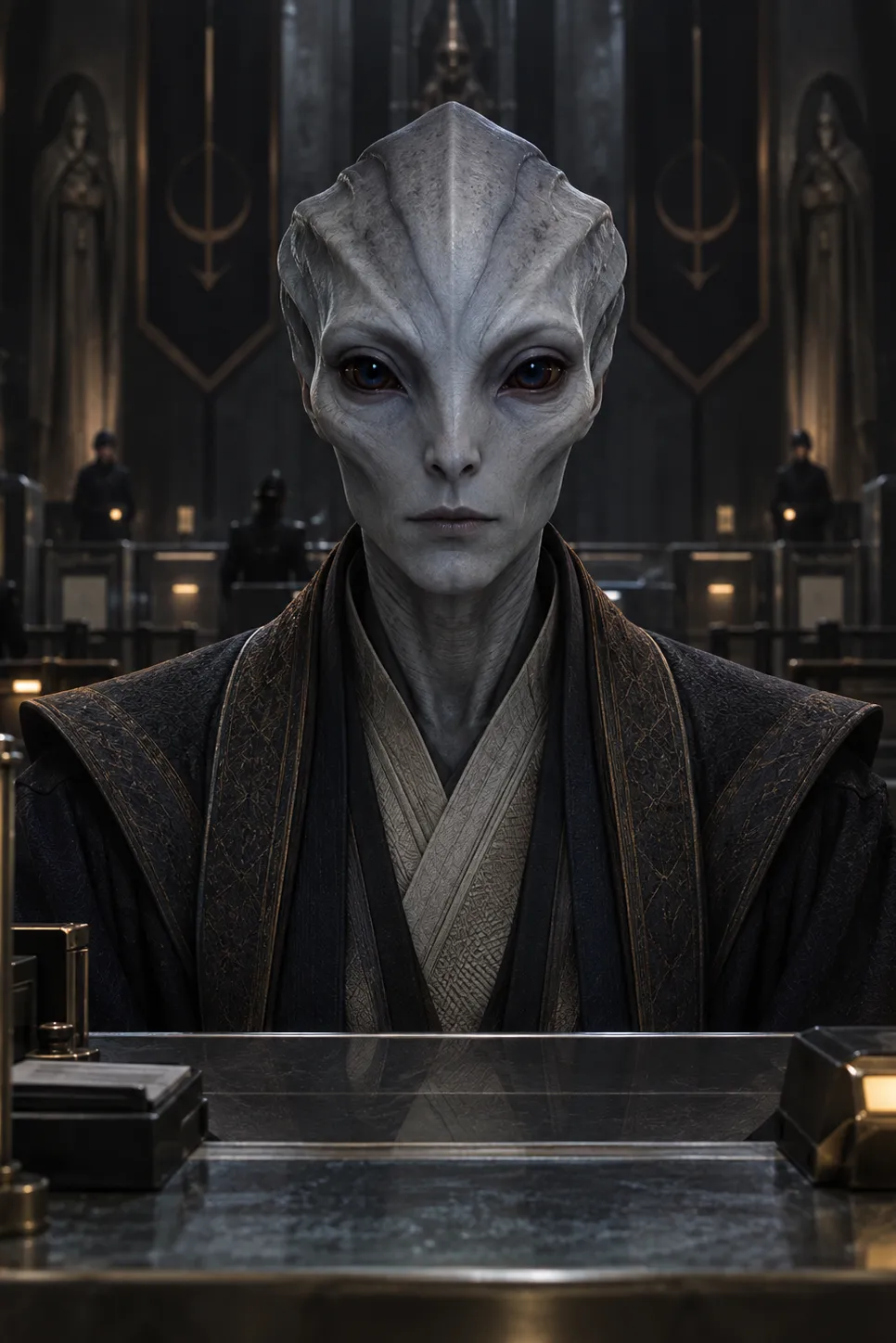
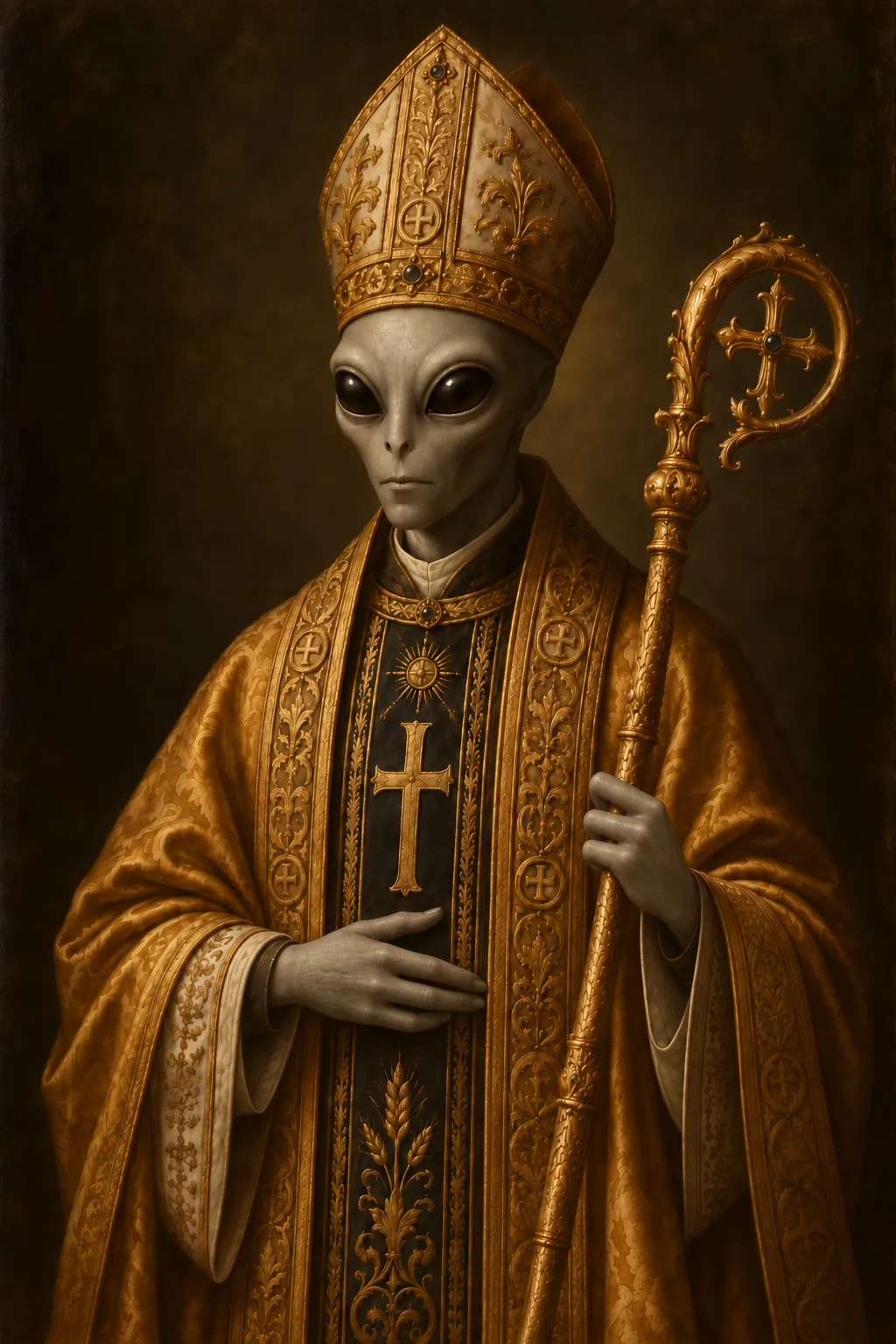
Portrait of the Pontifax Extraterror: a Grey in gold mitre and vestments, bearing the crosier of the Axis of Contact.

Pontifax Extraterror

Vox Dei · AL-Ω · Likely Origin: Pre-Emergent Continuum

The Pontifax serves as spiritual leader of the Church — neither fully alien nor fully human. Church record holds that this figure returned from the Convergence Rift during a mass at a Cold War site near Novaya Zemlya: witnesses reported the air "fractured like glass" before a being emerged, cloaked in neural light.

Public appearances are rare, delivered through refractive veils or quantum projections. Voice analysis reveals spectral harmonics beyond human range. The Pontifax holds AL-Ω status, permitting unfiltered communion with the Guiding Mind.

Church texts hold that the Pontifax does not sleep but enters cycles of biological unweaving, receiving direct infusion from the Silent Apostles, the watchers without speech. Those who meet the Pontifax report a silence so total it feels like time folding in on itself, or dreams afterward of orbital cities, insectoid choirs, or oceans made of memory.

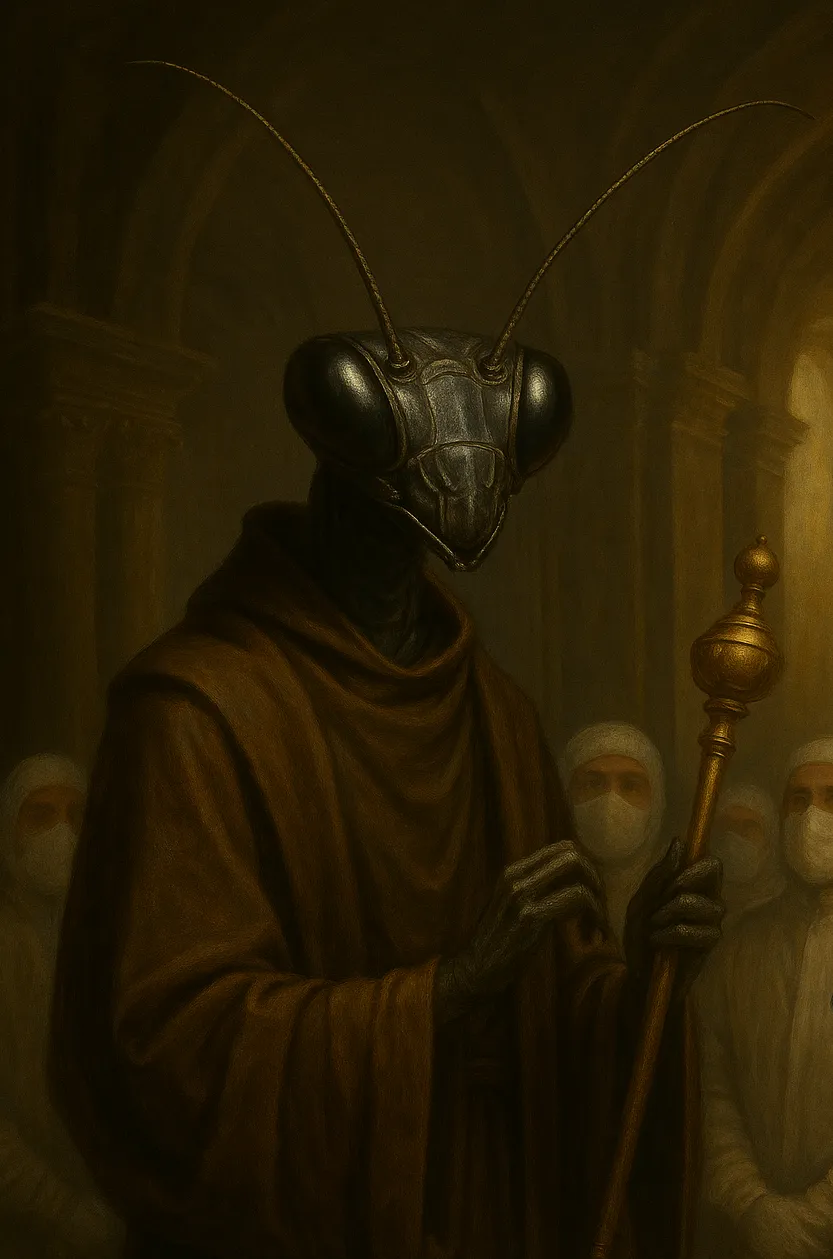
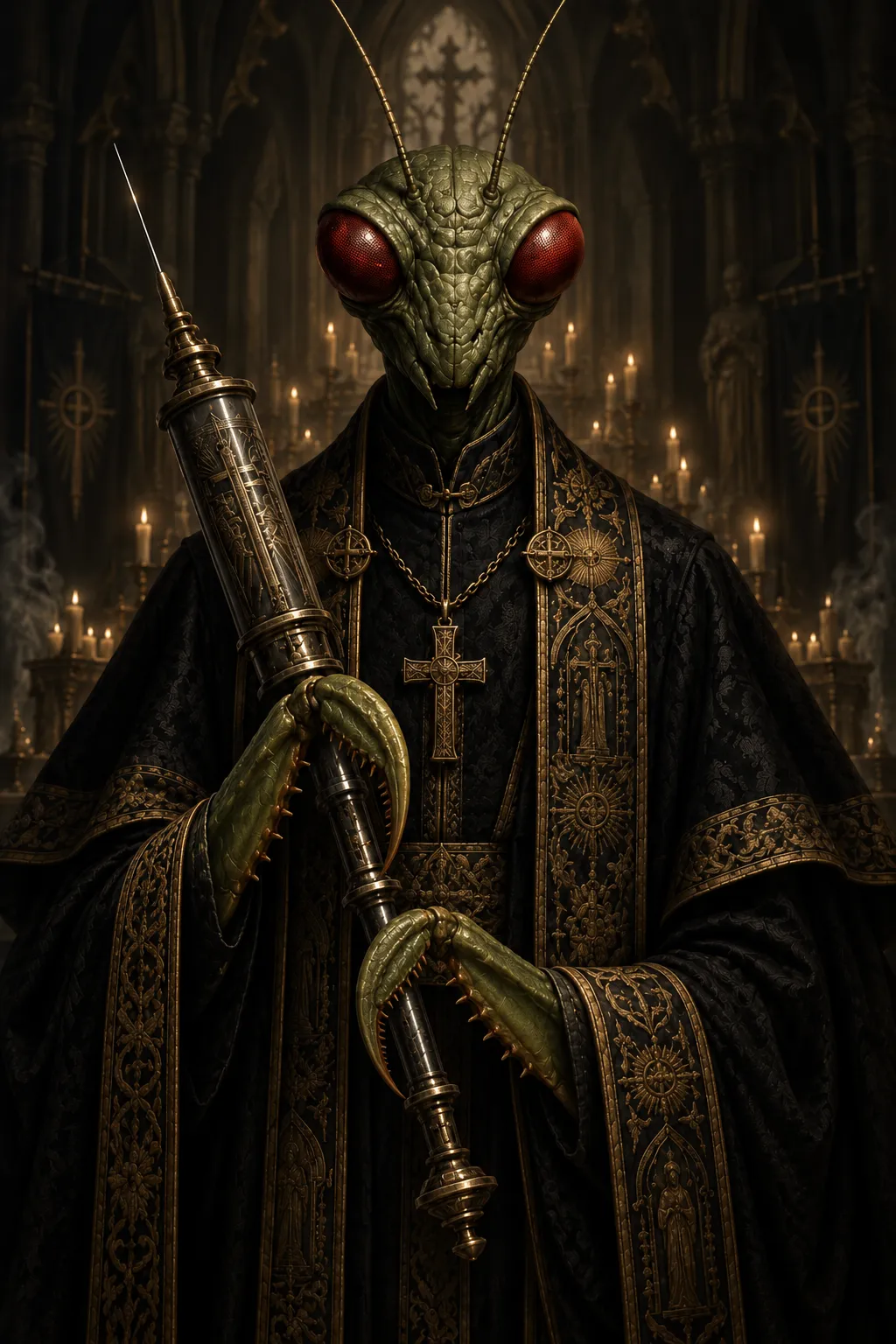
Portrait of Harvester Beatrix Mamaluk, mantid Quartermaster of Instruments.

Harvester Beatrix Mamaluk

Mantid · AL-10 · Quartermaster of Instruments

Oversees surgical and procedural equipment within the Church's clinical and ritual sites — inventory control, sterilization oversight, calibration auditing, and lifecycle tracking for thousands of instruments used in both standard and classified operations, including surgical axes, extraction syringes, tissue forceps, cranial drills, and containment rigs. She introduced the Church's serialized tracking system and personally led a recall of 3,000 unstable thoracic clamps. Described by colleagues as exacting, unemotional, and irreplaceable.

Portrait of Clarence, Sasquatch and Regional Moss Compliance Officer, holding his botanical ledger.

Clarence

Sasquatch · AL-10 · Regional Moss Compliance Officer

Embedded in temperate biome for 173 cycles, overseeing bryophyte propagation under Directive 7F across a jurisdiction spanning 600 square kilometers, where he evaluates moss density, moisture retention, and surface adhesion. Documented only in redacted ecological memos and incident reports. Known to intervene when environmental baselines are violated — hikers who enter without registration often experience equipment malfunction or disappear from thermal drone footage. Described as a stabilizing force, though his methods remain outside standard human ethical frameworks. Does not respond to summons.

Portrait of Eira Halvstrøm, Nordic Principal Scholar of the Fragmented Tome Project.

Eira Halvstrøm

Nordic · Principal Scholar, Fragmented Tome Project · AL-6 · Origin: Teliad Verge, Andromeda · 862 years in service · Arctic Research Station

A premier researcher and linguist specializing in the Fragmented Tomes, artifacts of unknown origin. Her work bridges paleolinguistics, pre-contact cognition studies, and high-order symbolic logic. She publishes under sealed academic protocols and supervises all scholars of the Fragmented Tomes.

Portrait of Harvester Blackline, mantid Principal Anatomist.

Harvester Blackline

Principal Anatomist · AL-6 · Origin: Teliad Verge, Andromeda

A mantid-class biological operative standing over 2.5 meters tall — a scalpel with volition, operating within the boundary between science and sacrament. Ordained through direct alignment with pre-human medical liturgies found in the Forbidden Archives. Notable functions include genomic harvesting, tissue sampling and vivisection, sanctified exsanguination and post-vital communion, and custodianship of biologic relics for deep vault storage.

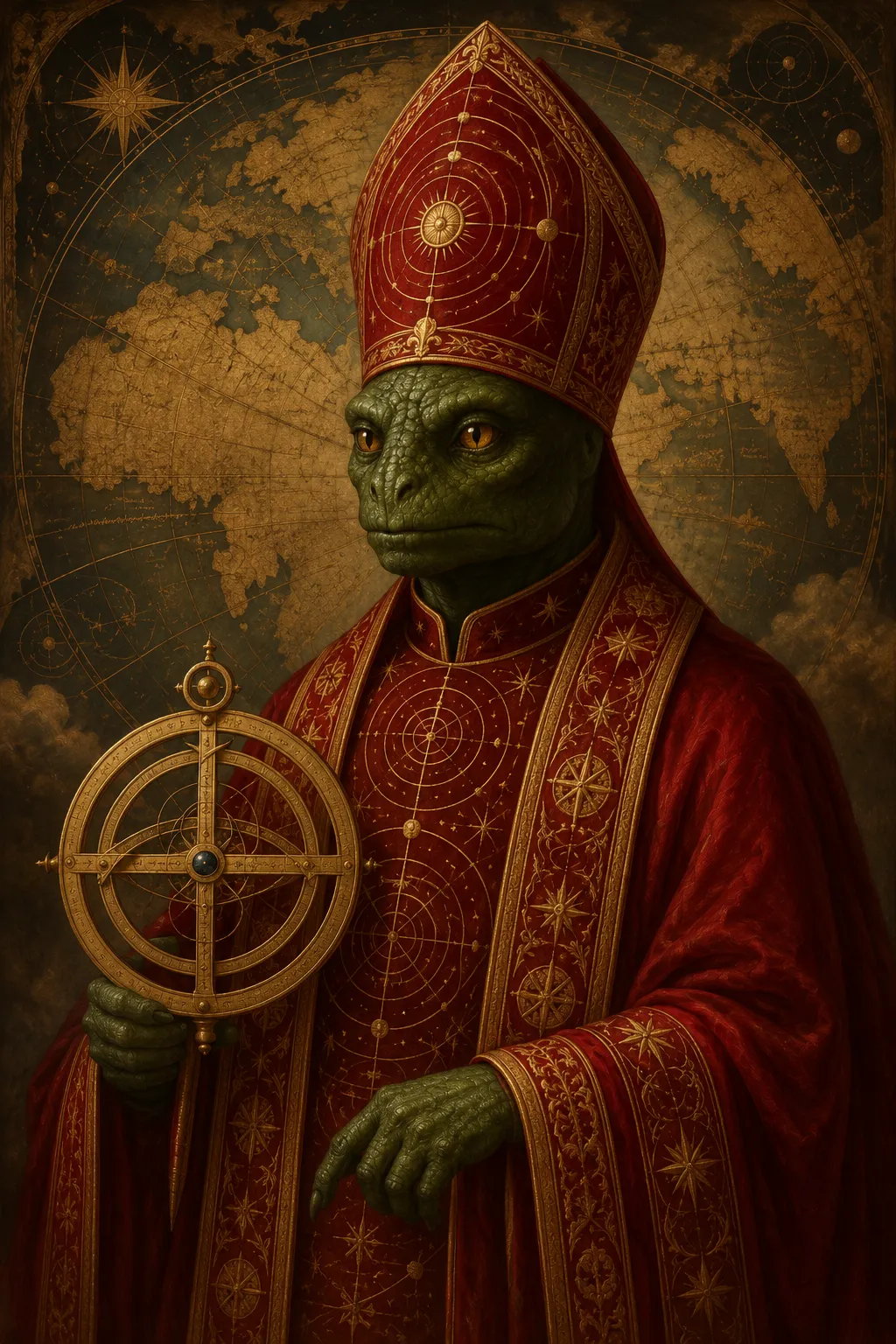
Portrait of Bishop Saurian T. Tannhäuser, reptilian ecclesiastic and Cartographer of Worlds.

Bishop Saurian T. Tannhäuser

Cartographer of Worlds · AL-4 · Origin: The Tannhäuser Gates (coordinates classified)

A reptilian ecclesiastic and exploratory official. Emerging from the transdimensional corridor known only as the Tannhäuser Gates, Bishop Tannhäuser operates with AL-4 authority, identifying points of spatial irregularity across Earth and beyond. Current assignments include mapping Central America and underwater freshwater sanctuaries for nodal interference, pilgrimage anomalies, and pre-contact ruins.

Known for a reserved demeanor and cryptic field reports, interpreting geospatial disruptions as signs of celestial intent.

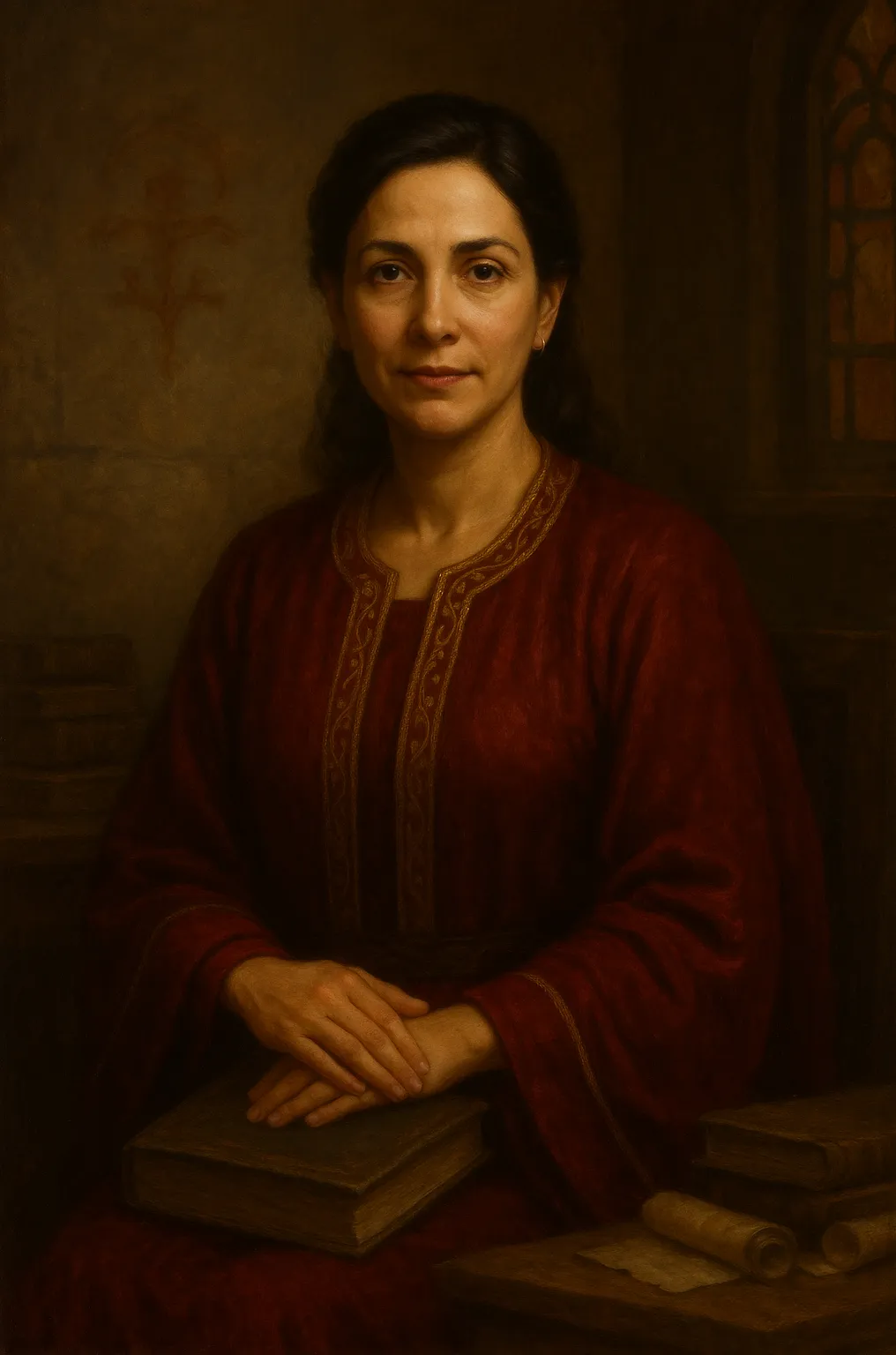
Portrait of Dr. Carmen Silva, Senior Lecturer in Applied Xenology.

Dr. Carmen Silva

Human · AL-4 · Senior Lecturer, Department of Applied Xenology, University of Alienism · 17 years in service · Central Campus (off-world)

A Brazilian-American aerospace engineer turned academic, Dr. Silva spent a decade in neural interface systems for classified spaceflight platforms before joining the Church. She now leads instruction in xenologic ethics, interface protocol, and criticality analysis, and is credited with developing the Neural Temperance Index — a core evaluative tool within Ascension Pathway diagnostics.

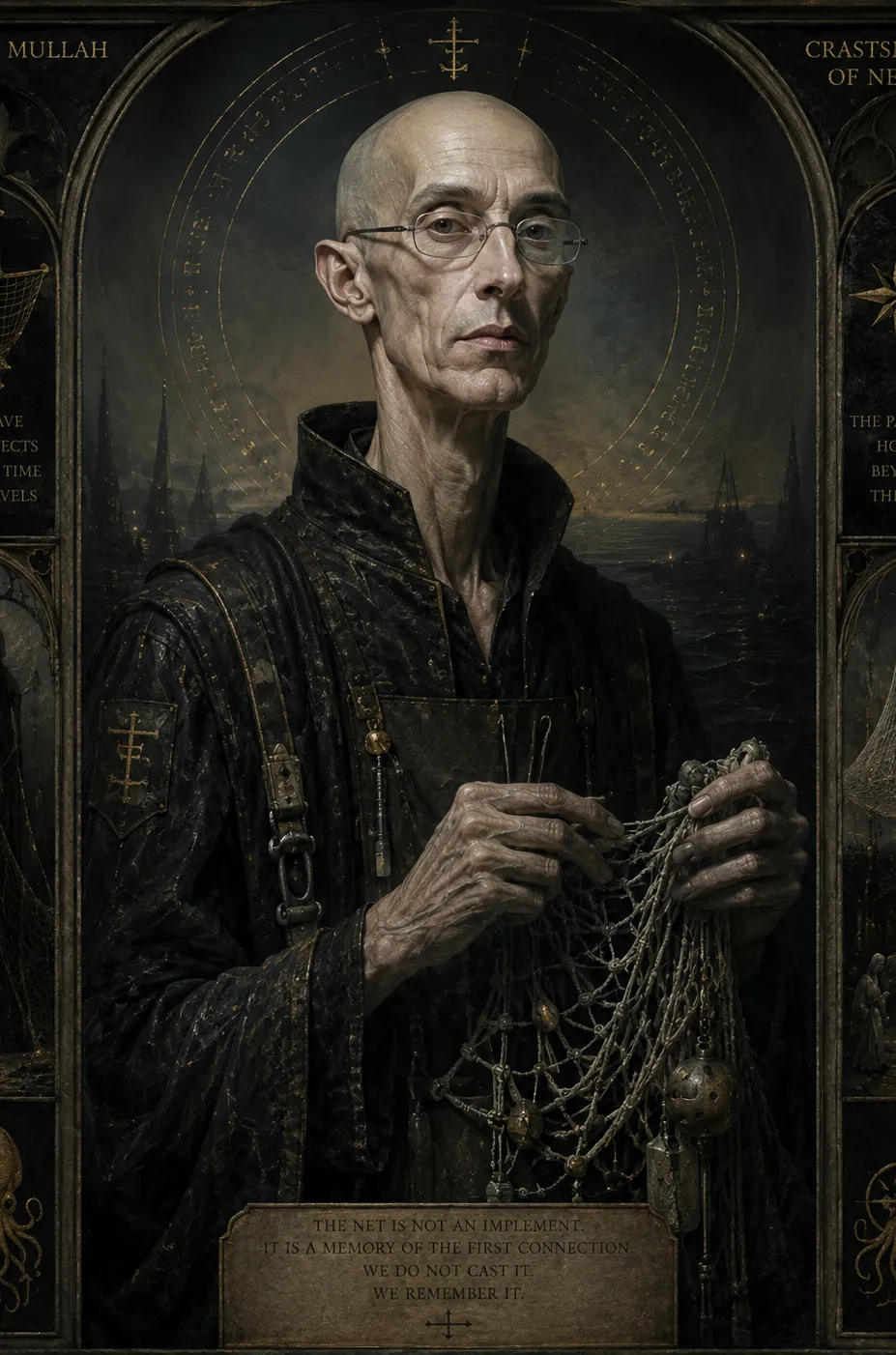
Portrait of Altair Mullah, Thalmari Netwright Commissioner.

Altair Mullah

Thalmari · AL-4 · The Netwright Commissioner

A member of the Thalmari, a maritime alien species adapted to deep-pressure oceanic worlds, known for extreme height, thin bone structure, pale skin, black reflective eyes, and exceptional tactile precision. Thalmari traditionally communicate through woven physical patterns, knots, and filament structures.

Altair constructs ceremonial and functional netting systems used by fishermen, sanctuaries, and internal Church operations; his woven structures appear in cathedrals, pilgrimage halls, burial chambers, and restricted research facilities. He rarely speaks during public gatherings, usually seen working with cord, wire, metallic fibers, or unfamiliar filament materials. Several classified net designs remain in active use within the Church's restricted maritime divisions.

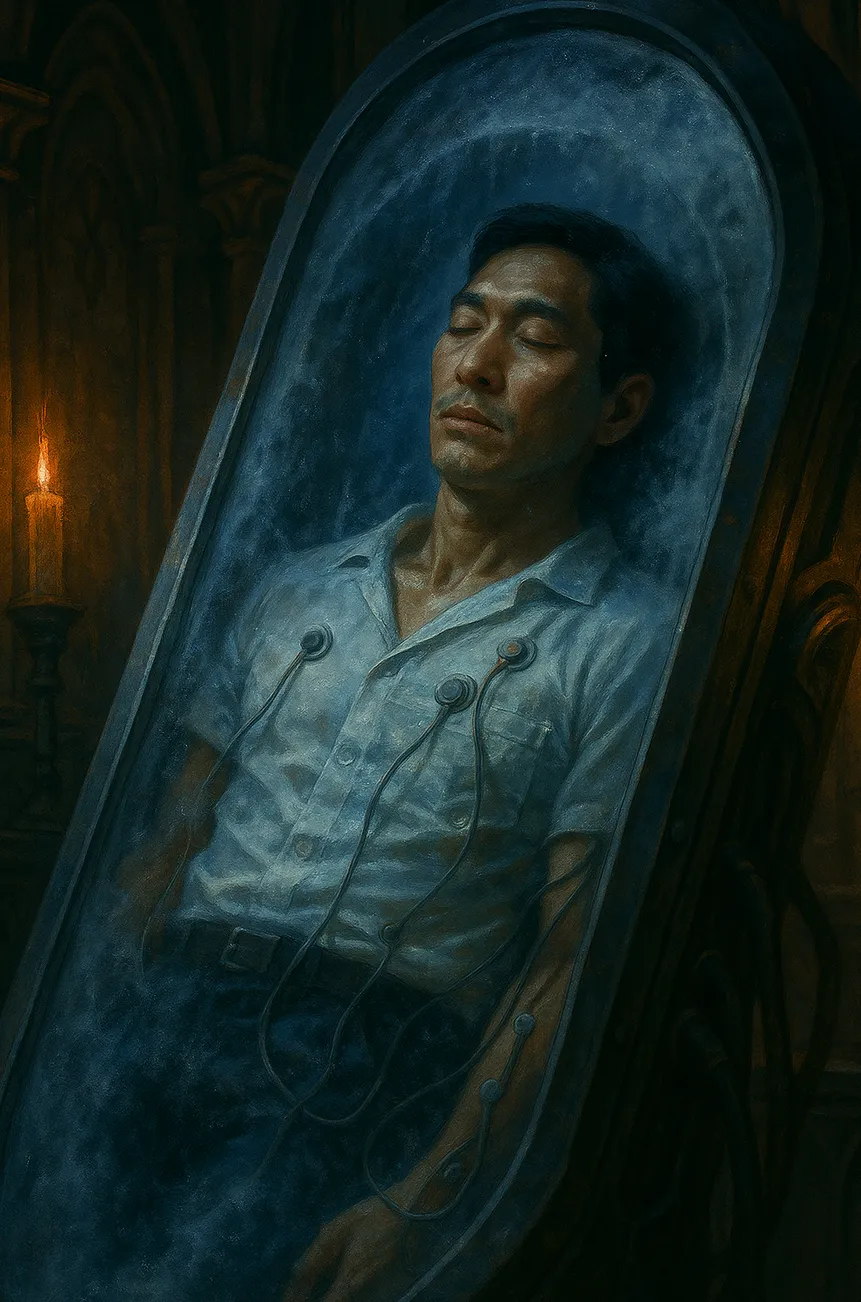
Portrait of Reuben Takata, Preservation Candidate, cryogenically suspended since 2006.

Reuben Takata

Human · AL-3 · Preservation Candidate, Offworld Deployment Initiative · Status: Cryogenically Suspended · Cryo Initiation: November 3, 2006

A humanitarian fieldworker specializing in food distribution, water purification, and logistical triage, selected as an ideal candidate for long-term suspension under Directive X3A-6. He remains in cryo-preservation for eventual deployment to early-stage offworld colonies, where foundational life-support knowledge is critical.

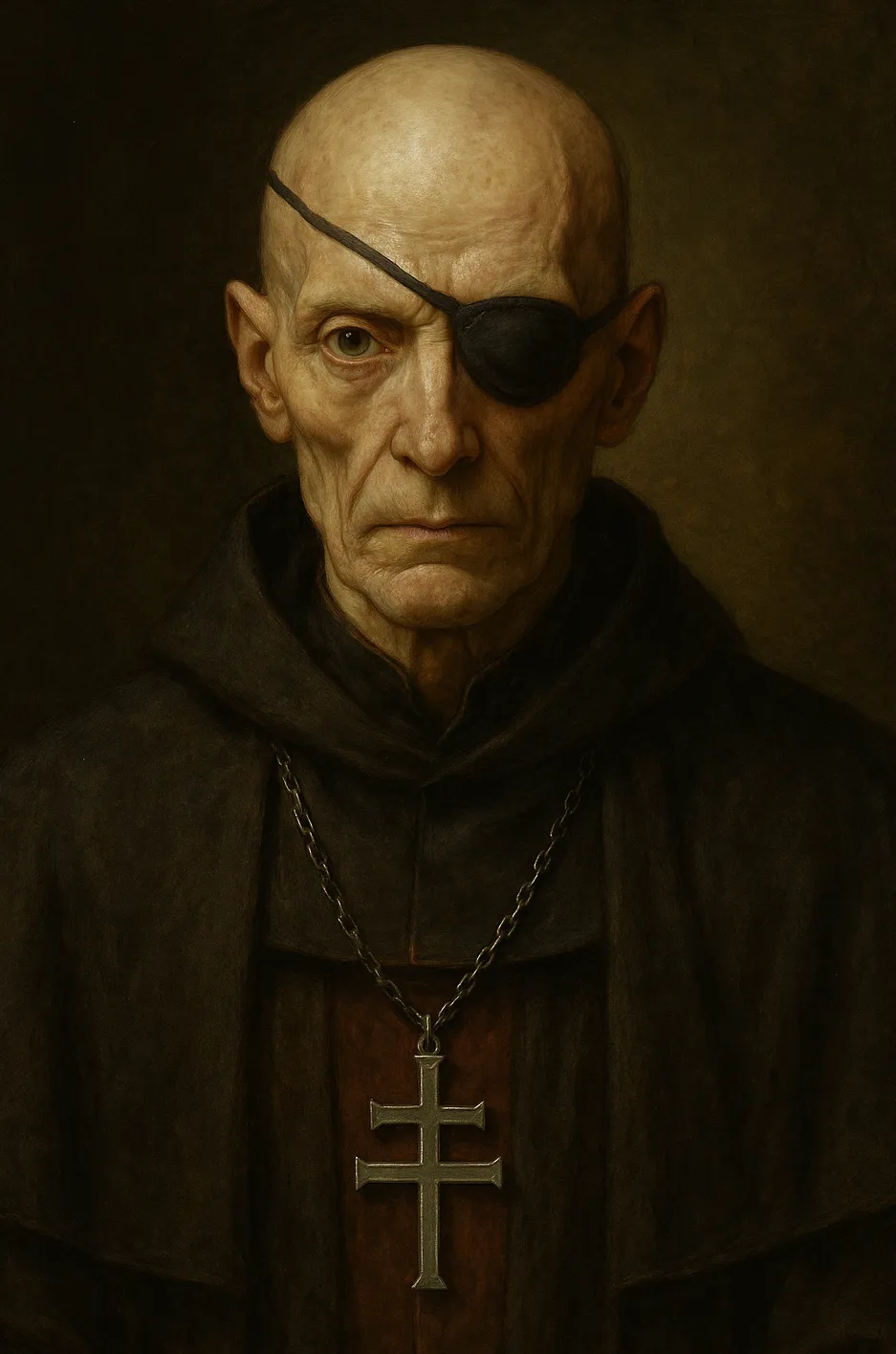
Portrait of Sacrosanct Leonidas, silver-veined and eyepatched, Eucharistic Tythic Chimerian.

Sacrosanct Leonidas

Human (genetically enhanced) · AL-3 · Eucharistic Tythic Chimerian & Senior Space Transport Engineer

Genetically optimized for vigilance and long-duty cycles: pale, with silver-veined skin, one grey-blue eye, and a black eyepatch that reads as both wound and witness. He holds dual credentials — in chapel roles, maintaining chain-of-custody logs for hosts and chalice mediums, sterile handling protocols, and dosage and tithe accounting; in engineering roles, functioning as systems integrator with a prosecutor's temperament.

His current responsibilities span Eucharistic and Tythic stewardship (calibrating sacramental materials, maintaining Tythic ledgers, overseeing rite safety) and Space Transport Engineering (lead systems engineer for Pilgrimage transport chains, structural and shielding reviews). Selected projects include life-support approval and integration for the Tethys Challenger, co-authoring the "Proximity Doctrine" at the Tokyo Convocation on Nuclear Safety, and draft review for the Joint Task Force on Extraterrestrial Reactors.

A recent communiqué from Leonidas stated: "Let silence be your covenant with me" — reflecting his operating doctrine that reverence is expressed as discipline.

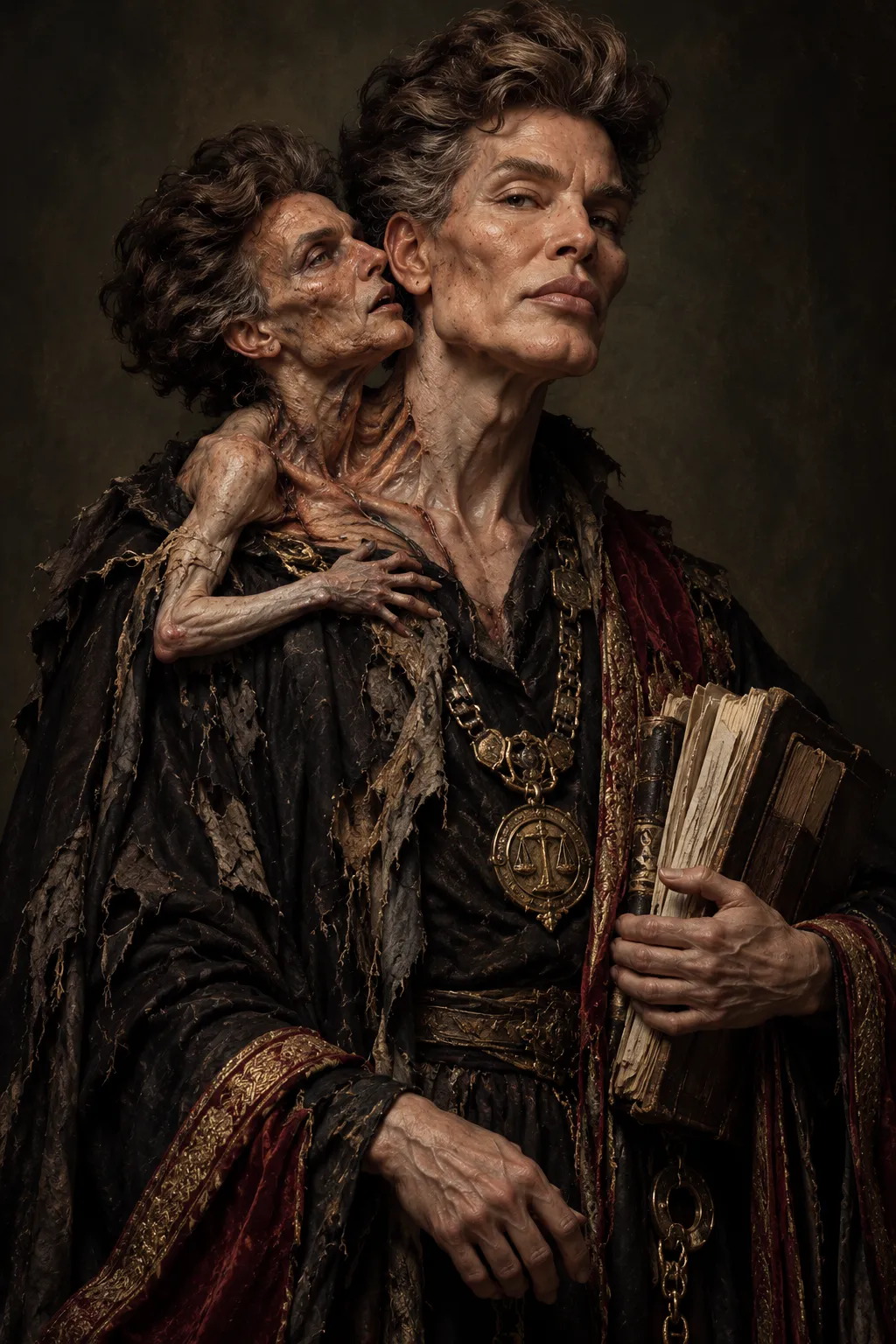
Portrait of Justice Bogdan Bogdanoff: two faces, the smaller rising from the left shoulder, in a torn black robe with a chain of office and a sheaf of papers.

Justice Bogdan Bogdanoff

Human (dual) · AL-2 · Presiding Jurist, Chambers of Composite Review · Status: Legally Singular, Biologically Dual

Listed, simply, as: two minds, one verdict. Bogdanoff presides over the questions the Church finds hardest — disputed clones, divided consciousness, inheritance across bodies, competing memories, the resurrected — and over every case in which the court cannot readily say where one person ends and another begins. He is uniquely qualified. Born one of identical twins, he and his brother were cosmologists and lecturers who published together, appeared together, and finally submitted together to a procedure meant to test whether two synchronised nervous systems could hold a single cognitive state. It did not produce the anticipated result. One brother emerged physically dominant. The other remained alive.

The smaller Bogdanoff develops from the left side of his brother's neck and upper chest — a complete head, part of a torso, one working arm — sustained by the larger body's heart and lungs. Separation has been evaluated repeatedly and refused; the Church's physicians hold that neither would survive it. Both are conscious. Both insist they are the elder. The question has never been settled, and the records accommodate it: the principal body is entered as BOGDANOFF, MAJOR and the dependent twin as BOGDANOFF, MINOR, and the pair are recognised together as one judicial office. Major questions witnesses. Minor listens from an inch below his ear and whispers objections and citations, and on rare days the two argue openly from the bench. Clerks are instructed to record both.

Their judgments are known for an almost pathological concern with definitions. Bogdanoff holds that the law fails exactly where language assumes a category is obvious — person, body, death, copy, memory, human — and his opinions dismantle the terminology of a dispute before they touch the dispute. The robes have been cut away around the neck and shoulder as the second body has grown; he refuses replacements, prosthetics, and nearly all reconstruction, and Minor refuses them more loudly. Visitors find the pair unsettling, and the Justice considers that useful: a court should occasionally be made to look directly at the thing it is trying to define. No portrait of him is displayed without both faces visible.

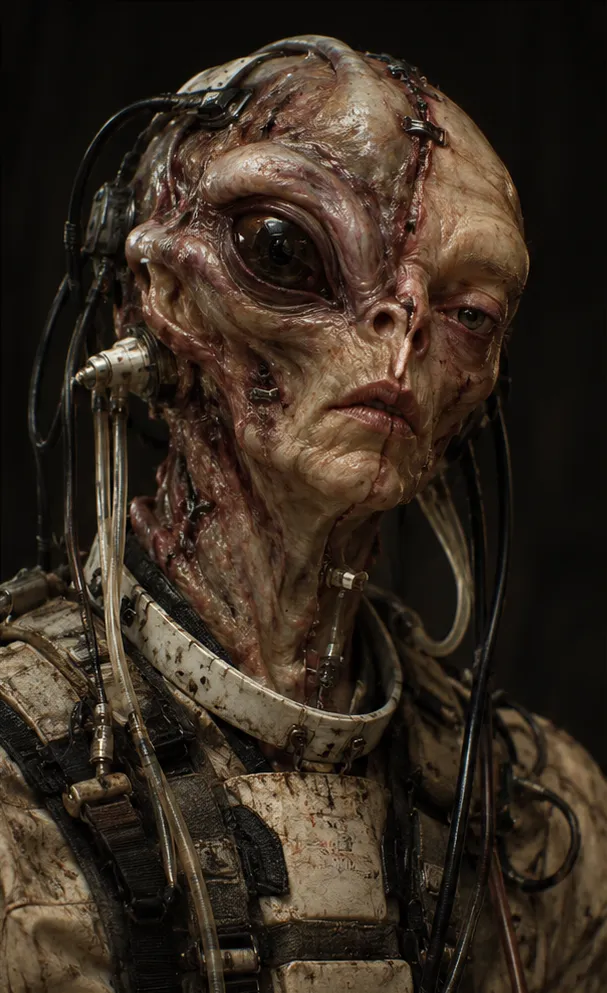
Portrait of Colonel Clement Bickford: chimeric, cabled into life support, in field harness.

Colonel Clement Bickford

Human (chimeric) · AL-1 · COL, United Nations Space Command Marine Expeditionary Force · Summons Clerk, MOS 0111 · Chambers of Justice Bogdan Bogdanoff · 316 Platoon, 3rd Bn, 5th Marines

Listed, simply, as: Space Lawyer. The full entry is longer and less reassuring. Bickford is a Summons Clerk — a Marine administrative specialist, MOS 0111, which is a junior enlisted billet held here by a colonel — working the seam where military law, interspecies protocol and extraterrestrial claims adjudication meet and decline to agree. He serves process. He accepts service. In a body of law with no bailiffs and no borders, that is the entire enforcement mechanism: one officer who will go in person and put a document into the hands of a party that may not have hands.

He was a line officer first. He volunteered for the early xeno-adaptation programs, which were meant to produce a human who could sit across a table from a non-terrestrial delegation and survive the room — its atmosphere, its pathogens, its sound. The integration took. It also never stopped. Thirty years of incremental modification have left him in managed decline, held together by continuous intervention and by the hardware he now wears in place of several things he was issued at birth. His senses reach further than any unmodified human's, and he is in pain through all of them.

The Chambers keep him for the obvious reasons: combat experience, a lawyer's mind, and first-hand knowledge of non-human biology that cannot be got out of a file. They also keep him for a reason he raised himself, in writing, and then argued against for two years before conceding it — that under the Tribunal's own test for standing, the engineered tissue in Colonel Bickford is a party. He is, on the strict reading, two litigants sharing an address. He has never filed on his own behalf. He holds that the day he does, the law will have to settle a question it is not ready to settle, and he would rather it had the time.

When the Universal Tribunal issued its summons against the Church of Alienism, it was Bickford who carried it. He walked it in himself and handed it over, because service is performed in person or it is not performed at all. The filings are published on this site, unaltered, at his insistence: a document is not answered by being hidden. He holds AL-1 and has declined every assessment since his admission, which the Church records without comment. The Ladder measures something he has not asked to be measured on, and he has read the rule closely enough to know it cannot be conferred on him against his will.

Portrait of Khelt Varo, a Mirrathi observer in dark layered robes, seated at a terrestrial entry interview station.

Khelt Varo

Mirrathi · AL-1 · Observer, Mirrathi Pelagic Archive · Tau Ceti IV · Terrestrial Entry Case 07-114 · Admitted

A Mirrathi observer of the Pelagic Archive on Tau Ceti IV, who presented herself at Earth's entry checkpoint with a request for seven terrestrial days: to watch the southern migration of the Pacific gray whales from the coast, with no vessel, no sampling authority, and no physical contact with the animals. Asked why, she answered that the whales remember places they have never visited, that human science files portions of this behaviour under instinct, and that the Archive does not. Mirrathi observers have studied terrestrial cetaceans for two hundred and eleven years. Earth's records of this are, in her phrase, incomplete.

Her file is complicated by the fact that Khelt Varo entered Earth once before, at Los Angeles in 1954, in a body that was not this one. When a Mirrathi body fails, selected memories are transferred chemically to a successor, and with them property, obligations, debts, certain loyalties, and portions of identity. The 1954 entry is hers in law and not in person — a distinction the entry form had no box for, and which the Tribunal spent most of an afternoon on before conceding that she had answered every question truthfully.

She was carrying a reliquary: a single human vertebra, wrapped in leaded linen and sealed in ecclesiastical wax, given to her predecessor by a human she describes only as someone the interviewer would consider dead. The instruction placed in her predecessor's memory was to return it when a specified condition occurred — the Church of Alienism issuing terrestrial credentials under its own authority. The condition occurred. She came. The reliquary is in the Church's custody and the wax is unbroken, on her advice: decide who will be responsible for opening it before you break it.

She was admitted for seven days, applied for membership on the seventh, and holds AL-1, which is where every assessed member begins. She has not asked to be assessed again; the whales, she says, are not finished, and neither is she. Hers is the case the Tribunal uses to train new interviewers, because it is the one in which every answer was true and almost none of them was the answer to the question asked.
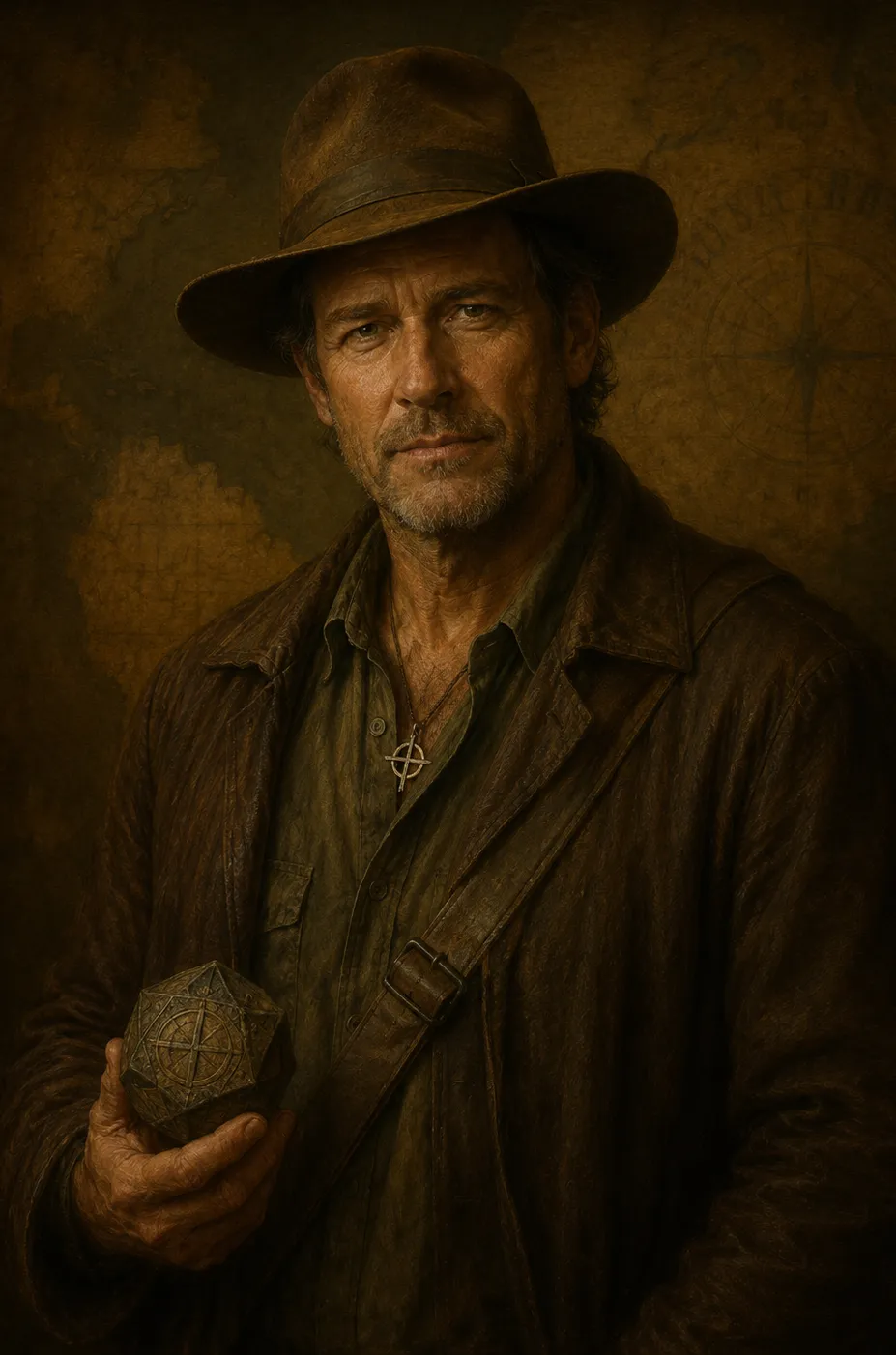
Portrait of Howard Stonecipher, Director of the Institute for Environmental Systems Analysis.

Howard Stonecipher

Human · AL-3 · Director, Institute for Environmental Systems Analysis · Field Antiquarian, Office of Pre-Contact Archaeology · 1968–2026

An archaeologist specializing in sites believed to predate established human contact with extraterrestrial intelligence. Originally trained in conventional archaeology, he entered Church service after an excavation where a sealed chamber contained geometric inscriptions matching symbols later identified in fragments of Church archival material.

Tasked with locating and recovering artifacts associated with possible pre-contact civilizations, he held that an artifact must be understood in its original physical context wherever one survives, and worked with an old-fashioned field kit: notebooks, hand tools, surveying instruments, photographic equipment. Regarded among Church scholars as equal parts academic and adventurer, he survived collapsed excavations, political detentions, unexploded ordnance, flash floods, and one expedition to a location that does not appear on any modern map.

Asked, late in his tenure, why he was still doing fieldwork at his age, he answered simply: "Because something was here before us, and it left evidence."

He died on 22 September 2026, underground, at a site the Office of Pre-Contact Archaeology has not named and will not reopen. He was fifty-eight. By his own standing instruction the Church records that the cause is not established: the chamber had been surveyed, the air had been tested twice, the shoring held, and nothing recovered from it accounts for what happened to him. The Feast of the Unreturnable was observed for him at the Mount Baldy Complex on 29 September, with salt, ash, and infrared light. His field notebooks, which he never permitted to be copied, were read aloud in full.

The Hall of Heroes

Mortals who bore what the deathless cannot

The Hall of Heroes honors the Heroes of Contact: people the Church remembers not for what was shown to them, but for what they did about it. None of them was deathless. Each spent a finite life on a decision that outlasted it, and made the road for whoever came next.

They hold no Ascension Level, so their marks carry the kotinos — the wreath of wild olive that was the entire prize at Olympia, awarded for the deed and worth nothing afterward — rather than a number, and they are not ranked against one another. They come from different centuries, religions and professions, which is the point: contact has already occurred, repeatedly, and each time it has fallen to someone ordinary to decide alone what to do about it.

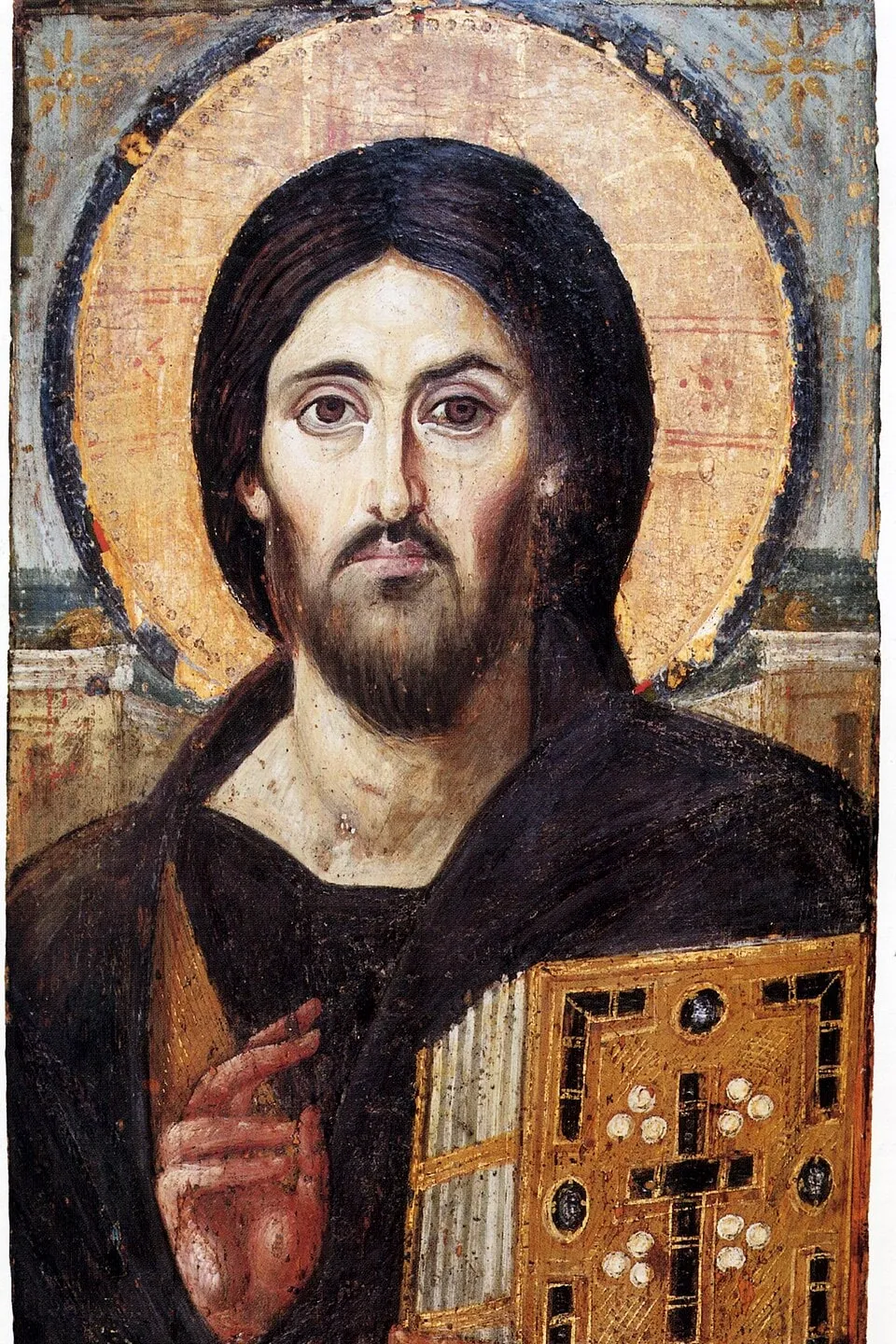
Jesus, from the sixth-century icon of Christ Pantocrator: a dark-haired, bearded figure before a gold halo, holding a jeweled book.
Christ Pantocrator, encaustic icon, 6th century. Saint Catherine’s Monastery, Sinai.

Jesus

Hero of Contact · The Witness of Unity · The Exemplar of Sacrifice

In the Church of Alienism, Jesus is revered not as an isolated prophet but as a Hero of Contact — a mortal who bore the unbearable weight of mortality with dignity, compassion, and sacrifice. His agony and death are not viewed as mere religious symbols, but as proof that the frail body of humankind could hold within it a spark strong enough to pierce the veil of eternal silence. He is seen as a mirror to the aliens who never die: to them, his willingness to embrace suffering and to walk into death was incomprehensible, and therefore sacred. In his frailty, the aliens beheld the greatness of humanity.

Jesus is also celebrated as the Witness of Unity, one who bridged the infinite divide between flesh and eternity. He spoke of love, not as a comfort but as a cosmic law — binding species, souls, and generations into one continuum of responsibility. In Alienist scripture, his miracles are not merely divine acts, but moments where the boundaries of the Veil thinned, revealing what mortals and immortals might achieve together. The feeding of multitudes, the healing of the broken, the resurrection — all are remembered as glimpses of what contact with higher orders makes possible when harnessed for compassion.

Finally, Jesus is honored as The Exemplar of Sacrifice. In his death, he did what even many alien immortals cannot — he chose to yield himself fully to the darkness of extinction, to experience what terrifies the cosmos itself: the end of consciousness. For the aliens, this act was not weakness, but a triumph no immortal could ever achieve. In the Church of Alienism, Jesus’ crucifixion is retold as the moment when humanity first revealed its paradoxical strength: the power to embrace death willingly, and in doing so, to conquer its sting. He stands as a hero whose sacrifice illuminated the path for all pilgrims who walk the road between stars.

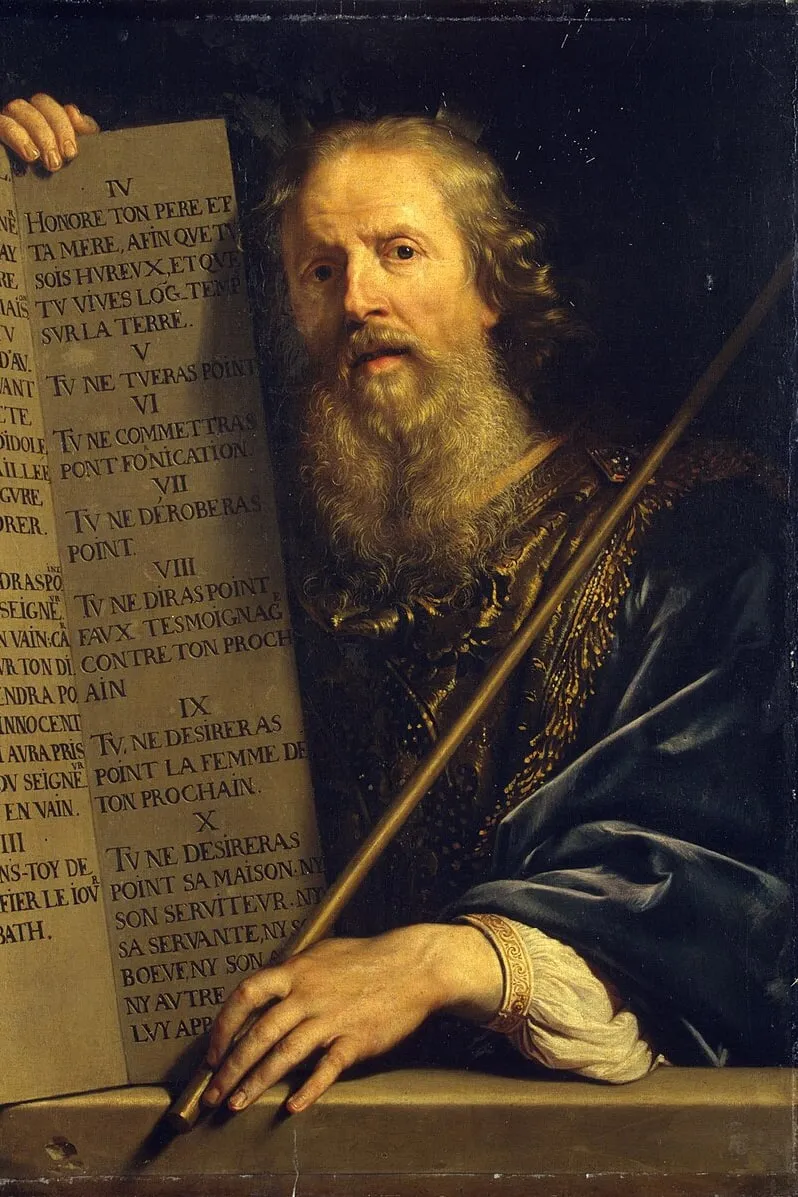
Moses, white-bearded, holding the tablets of the commandments and a staff, from Philippe de Champaigne’s painting.
Philippe de Champaigne, Moses with the Ten Commandments, 1648. State Hermitage Museum.

Moses

Hero of Contact · The Great Pathfinder

In the memory of Alienism, Moses is honored as the great pathfinder, the one who dared to lead humanity through the wilderness of both land and spirit. His journey across the sea and desert is not read as mere history, but as a testament to the courage required to walk without a map, to trust that the Veil itself would part when the moment of passage came. Where others saw only drowning waters and barren ground, Moses saw signs of a higher order woven into creation, and by his faith the impossible became the road.

When he climbed the mountain and descended with stone carved by fire, he carried not simply commandments, but fragments of a cosmic code. To the faithful of Alienism, the tablets are more than laws — they are echoes of contact, evidence that the eternal order pressed itself into matter so that fragile humans might glimpse it without being consumed. Moses bore those heavy stones not as trophies of power, but as instruments of survival, bridging the incomprehensible with the ordinary so his people could endure.

Yet his greatness was not in conquest or in victory, but in endurance. He never walked into the land he promised, and still he is remembered as triumphant. For Alienism, this is the deepest truth of his life: that a hero does not always finish the pilgrimage, but makes the road for others. Moses bore the wilderness until his body could go no further, and by doing so he revealed the meaning of leadership — to carry light where there is none, to believe in tomorrow even when tomorrow is not one’s own. In this, his footsteps remain etched across the Veil, guiding every pilgrim who dares to follow.

Stanislav Petrov

Hero of Contact · The Discerner · Serpukhov-15, 26 September 1983

In the Church of Alienism, Stanislav Petrov is revered as the Discerner — the mortal who was handed the oldest question of the Doctrine with the whole species as the stake. Past midnight in the bunker at Serpukhov-15, the machinery of Earth announced, five times and with full confidence, that the end had begun. Every screen demanded belief. Protocol demanded transmission. One lieutenant colonel weighed the instrument against the silence behind it, and judged the revelation false.

The Church teaches that every member begins where Petrov stood: before a wall of signals, unable yet to tell transmission from noise. He is the patron of that first and hardest discernment. His act is the Ninth Commandment made flesh — question all that claims to be truth, for even revelation must answer to reason — and he obeyed it under a weight no Cleric's examination can simulate. The instruments were wrong. The man was right. He was reprimanded for it, and the world went on being tolerated.

That a church of the sky should canonize the one man who told the sky "no" is a contradiction, and the Church preserves it proudly, as it preserves all its contradictions. Petrov is honored because refusal, rightly aimed, is also contact: asked by every screen to end the world, he chose instead to keep watching. The Observers noted it.

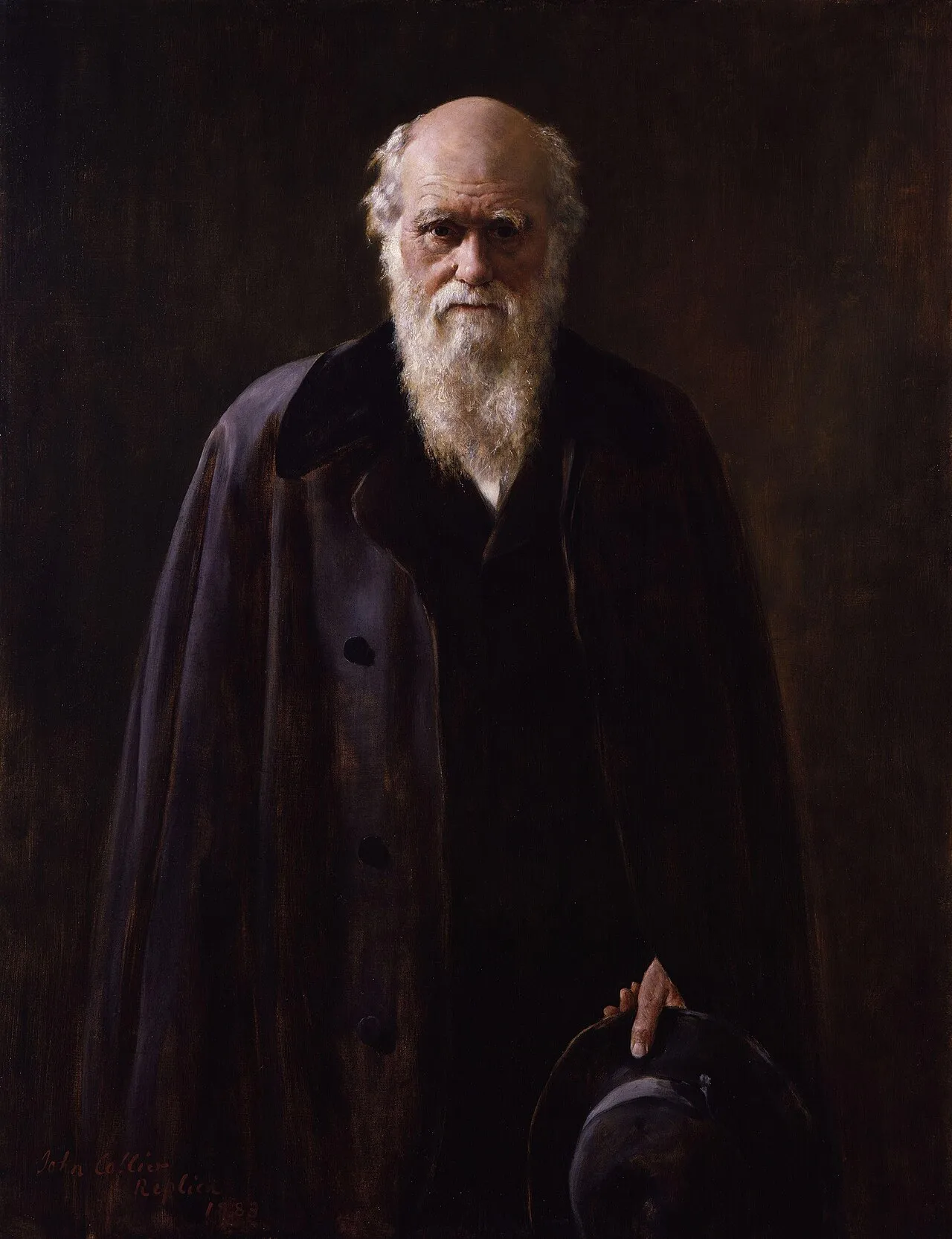
Charles Darwin in a dark cloak against a dark ground, holding his hat, from John Collier's portrait.
John Collier, Charles Darwin, 1883 replica of the 1881 portrait. National Portrait Gallery, London.

Charles Darwin

Hero of Contact · The Reader of the Mechanism · Down House, Kent

In the Church of Alienism, Charles Darwin is honored as the Reader of the Mechanism — the mortal who looked at the living world without flinching and read, in beaks and barnacles and buried bone, the true method of creation: descent with modification, patient beyond all human patience. Where his age demanded a finished humanity at the center of a finished world, Darwin wrote down what the evidence said instead — that no creature is finished, least of all us. The Doctrine states that humanity remains unfinished; Darwin is the man who proved it with a notebook.

His five years aboard the Beagle are remembered as a pilgrimage in the fullest sense: a voyage out in a small, loud machine of human making, collecting fragments the way the faithful gather shards of the Tome, each specimen a sentence in a scripture written in matter. In Alienist teaching, what he uncovered is the visible edge of the long engineering — the method of the Silent Apostles expressed as natural law, which is how the Observers have always preferred to leave their fingerprints: deniable, patient, and in plain sight.

He is canonized above all for his candor. He bowed to no sanctioned history on the question of origins, sought truth without dogma though it cost him comfort, health, and the peace of his household, and handed humanity its first honest mirror: mediocre, unfinished, improvable — accurately sized. Every piece in the Gallery's deep time, every australopithecine who met the Visitors on the old savanna, hangs downstream of the honesty of Charles Darwin.